
When a parent or loved one begins to need more help, many families find themselves asking the same question: Is now the time to move your loved one to an assisted living community? It is not an easy decision, and it rarely happens all at once. A parent may seem “mostly fine,” but small changes start adding up, and before long, you are carrying more and more of the responsibility.
Many families come to Cappella of Grand Junction after months of trying to make things work at home. They want to honor independence while also wanting safety, connection, and peace of mind. We meet families at this moment. Our role is to listen, offer clarity, and help you understand what assisted living is, when it can be helpful, and what steps to take next.
What are assisted living communities?
Assisted living communities are designed for older adults who still enjoy independence but need help with routine tasks that have become more difficult. They provide support, security, and community in a residential setting.
The National Institute on Aging explains that assisted living is meant for people who need help with everyday activities but do not require intensive medical care. It’s a setting where help is available, but independence is honored.
Assisted living communities offer a balance of privacy, personalized care, and access to support whenever it is needed. At a community like Cappella of Grand Junction, residents have their own private living spaces, access to chef-prepared meals, help with activities such as bathing or dressing when needed, and a calendar of programs that support social engagement, wellness, and purpose.
At Cappella of Grand Junction, assisted living is about more than services. It is about creating a place where older adults feel respected, supported, and connected. Many residents find that once daily worries are lifted, they actually feel more independent than they did at home.
What are the signs that it is time for assisted living?
Most families start researching assisted living after noticing patterns. When the same challenges keep showing up, it may be time to explore a setting built to support daily life.
Several common signs that families often notice can indicate assisted living may be a better fit include experiencing trouble with daily tasks, medication issues, isolation, nutrition concerns, and caregiver strain. Here are some of the most common indicators, translated into real-life examples.
Your loved one needs support with activities of daily living

Everyday routines like bathing, dressing, grooming, or moving safely around the house can become harder without someone there. You may notice clothes left unwashed, avoided showers, or increasing stiffness in movement.
Your loved one needs more support than family caregivers can provide
It is common for adult children to step in with transportation, grocery runs, and medication reminders. But when these tasks lead you to feel exhausted, overwhelmed, or stretched thin, that’s a sign something has shifted. Assisted living can offer consistent care so that family time can feel warm, not like added work.
Your loved one is feeling isolated

The pandemic reminded us how vital connection is, especially for older adults. Even outside of a lockdown, many seniors lose connection as driving becomes harder, friends move away, or chronic conditions limit outings. Studies show social engagement is linked to better mood, memory, and overall wellbeing.
Your loved one struggles with medications
Managing medication schedules can be tricky. Missed doses, double doses, and expired prescriptions are common challenges for older adults living at home. Assisted living communities help with medication management so that doses are taken on time and as prescribed.
Your loved one struggles with nutrition

Skipping meals, eating only snacks, or losing weight without explanation are important signals. Cooking can become tiring or complicated, and loneliness can make meals less appealing. At assisted living communities, meals are not just served, they are shared, balanced, and part of daily rhythm.
Your loved one’s home may no longer be safe
Homes can become risky as mobility changes. Stairs, loose rugs, and narrow hallways can increase fall risk. According to the Centers for Disease Control and Prevention (CDC), falls are a leading cause of injury among older adults.
If you’re noticing more falls, near falls, or fear of falling, that alone is a reason to talk with someone about a safer living environment.
Would the benefits of an assisted living community improve your loved one’s quality of life?
Once the signs point toward needing more support, the next question becomes: Would assisted living improve life, not just solve problems?
24/7 support from trained care partners
Assisted living provides around-the-clock support from professionals who know your loved one’s routines, preferences, and goals. That means help when it’s needed and reassurance at night, on weekends, and during transitions.
Built-in social connection
Isolation affects more than mood. It affects health, appetite, memory, and energy. Living with peers, sharing meals, and participating in activities creates opportunities for laughter, purpose, and belonging without the effort of planning everything at home.
The comfort of available community resources
Assisted living can simplify daily life. Instead of juggling meals, household chores, transportation, appointments, and caregiving tasks, residents can focus on hobbies, family time, continued learning, rest, and joy. This shift from managing daily life to enjoying it can be deeply meaningful.
Next steps
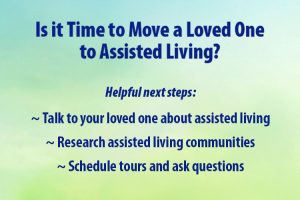
If you are wondering, “Is now the time to move your loved one to an assisted living community?”, you do not have to answer that question alone.
Here are a few helpful next steps:
- Talk with your loved one about assisted living. Approach the conversation with empathy. Share what you have noticed and ask what they want for their future.
- Research assisted living communities. Look for communities that align with your loved one’s values, needs, and personality.
- Schedule tours and ask questions. Seeing a community in person can provide clarity and reassurance.
At Cappella of Grand Junction, we are here to support you through every step of this journey. Whether you are just starting to explore options or are ready to take the next step, our team is happy to answer your questions and offer guidance.
Schedule a visit today and see how our community supports independence, connection, and peace of mind.